Privacy Without Building a Green Wall
A better privacy planting blocks the right view, fits the available space, and does not turn into a permanent pruning appointment.
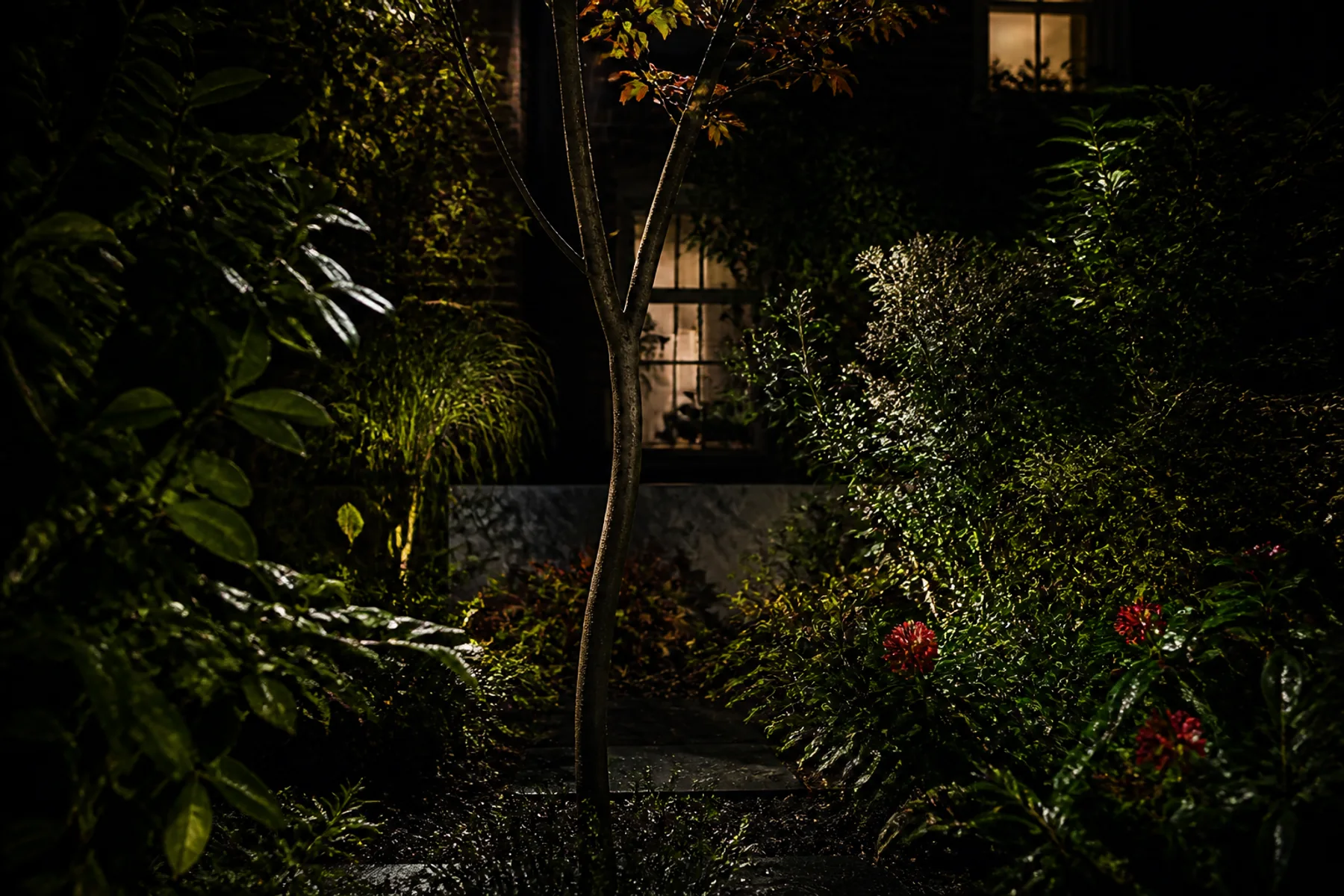
Wanting privacy is reasonable. Planting a row of whatever grows fastest is how reasonable people end up owning a very tall problem.
A useful screen should block the view you dislike, fit the space you actually have, and still behave like a garden. It does not need to become a solid green wall from property line to property line.
Stand where privacy matters
FRAME
Find the exact unwanted view
BLOCK
Interrupt only what needs to disappear
Stand where privacy matters
FRAME
Find the exact unwanted view
BLOCK
Interrupt only what needs to disappear
Block the view, not the entire sky
Stand where privacy matters and identify the exact sightline. You may only need to interrupt a second-story window, a neighboring patio, or the view toward a busy street. A carefully placed small tree or tall shrub can do more than a continuous hedge.
Check the view from inside too. The living room, kitchen, and bedroom often matter more than the far end of the lawn. University of Florida landscape research recommends considering views from patios and windows when planning a screen.
Measure the width before falling for the height
Privacy plants are usually sold by height, but width is what consumes the garden. A shrub expected to reach ten feet across cannot be kept in a three-foot strip without regular cutting and a growing sense of resentment.
Measure the depth available for planting. Then compare it with the mature width, growth habit, and space needed around paths, buildings, utilities, and neighboring plants. A naturally narrow plant often makes more sense than a broad plant forced into a narrow shape.
Fast growth is not a personality virtue. It often means more pruning, more competition, and a shorter period before the plant outgrows its role.
Mix the screen
A single-species hedge can be clean and formal, but it also puts the whole screen at risk from one pest, disease, or weather event. A mixed planting spreads that risk and usually looks more like a garden.
Combine plants with compatible light, soil, and water needs. Vary height and texture without collecting one of everything. Two or three repeated species can create privacy while preserving rhythm.
Evergreens provide year-round coverage. Deciduous shrubs can add flowers, fall color, and a lighter feeling. Use the density you truly need. Not every boundary requires total visual silence.
Decide how much clipping you want
A formal hedge is not inherently wrong. It is simply an agreement to prune. If you enjoy that work, make the line crisp and own it. If you do not, choose plants whose natural form fits the space and allow them to keep it.
Before buying, answer four questions.
- Which exact view needs to disappear?
- How much planting depth is available?
- Does the screen need to work all year?
- How often are you honestly willing to prune?
Privacy should make the garden feel more comfortable. It should not make the whole property feel smaller. Screen precisely, leave breathing room, and let the result look intentional from both sides.