Some Plants Are Too Messy Near the Patio
Flowers, fruit, leaves, and seedpods all land somewhere. Near paving and furniture, cleanup belongs in the design decision.

The plant beside a patio is not only a plant. It is also a roommate.
It drops things near your chair, leans into the walkway, hosts insects, catches on clothing, and occasionally stains the exact surface you paid too much to install. None of this makes it a bad plant. It may simply be badly placed.
A generous plant in a forgiving bed can become a daily argument beside pale paving.
A generous plant in a forgiving bed can become a daily argument beside pale paving.
Every beautiful thing has an aftermath
Flowers become petals. Fruit ripens and falls. Leaves shed. Bark peels. Seedpods open. Even evergreens replace foliage over time.
Before placing a plant beside paving, ask what it drops, when it drops it, and how difficult the material is to remove. Large fleshy fruit can stain or become slippery. Hard fruit and cones can be uncomfortable underfoot. Fine flowers may cling to damp surfaces. Slowly decomposing leaves can stay visible for a long time.
University of Florida research on urban tree selection specifically recommends considering fruit and litter near patios, sidewalks, and other paved areas.
Match the plant to the tolerance of the room
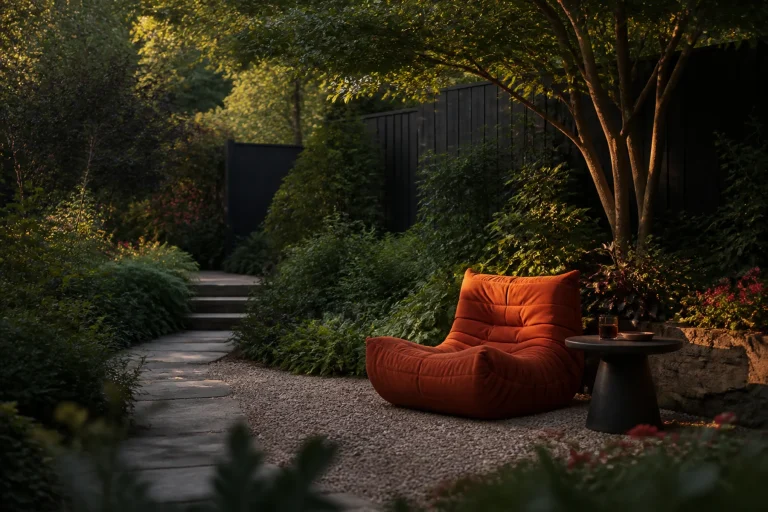
A relaxed gravel terrace can absorb fallen petals beautifully. A pale stone dining area may not be as forgiving. A pool deck, narrow stair, or accessible path needs a higher standard of clean footing.
Decide how polished the space should feel. The closer a plant is to food, furniture, water, or frequent foot traffic, the more its habits matter.
Look up as well as down
Mess is not the only concern. Branch structure and mature spread affect how people move through the space. A low, spreading tree may need repeated pruning beside a path. Thorny stems, irritating sap, or sharp leaves deserve distance from places where bare arms and legs pass regularly.
Roots and irrigation also matter. Choose plants suited to the available soil volume and avoid species whose eventual size is incompatible with the paving and structures around them.
Keep the drama, move the source
You do not need to ban every generous flowering tree or fruiting shrub. Move high-litter plants into beds where fallen material can disappear naturally. Use cleaner structural plants near the patio, then place seasonal abundance slightly farther away where it can still be seen.
Containers can hold short-lived, high-impact plants when you want more control. They also make it easier to change the planting if the relationship does not work out.
Before planting beside a patio, check three things.
- What falls from this plant through the year?
- Could it stain, become slippery, or hurt underfoot?
- Will its mature form interfere with movement or furniture?
A patio should make the garden easier to enjoy. Choose nearby plants that contribute atmosphere without turning every invitation to sit down into a request to sweep first.