Stop Aiming Landscape Lights at Everything
Good outdoor lighting reveals the route, protects the night, and lets darkness do some of the design work.

One lit tree can be beautiful. Twelve lit trees can make the garden look like it is being questioned by the police.
Outdoor lighting works best when it has a job. It should help people move safely, make the garden usable, and reveal a few worthwhile forms after dark. It does not need to prove that every plant is still present.
Darkness is not an unfinished part of the lighting plan. Darkness is the material that lets light matter.
Begin with movement
Walk the garden at night before adding another fixture. Find the point where a step disappears, a turn becomes unclear, or a keyhole is impossible to see. These are real lighting jobs.
Illuminate changes in level, entrances, and necessary routes without throwing light into faces or across the whole property. A fixture can be bright and still fail if glare makes the darker areas harder to see.
DarkSky International and the Illuminating Engineering Society recommend that outdoor lighting be useful, targeted, low level, controlled, and warm colored. In practical terms, light the thing that needs light, use no more than necessary, and turn it off when the need is gone.
A row of exposed fixtures, every trunk uplighted, bright blue white color, and beams escaping toward windows or the sky.
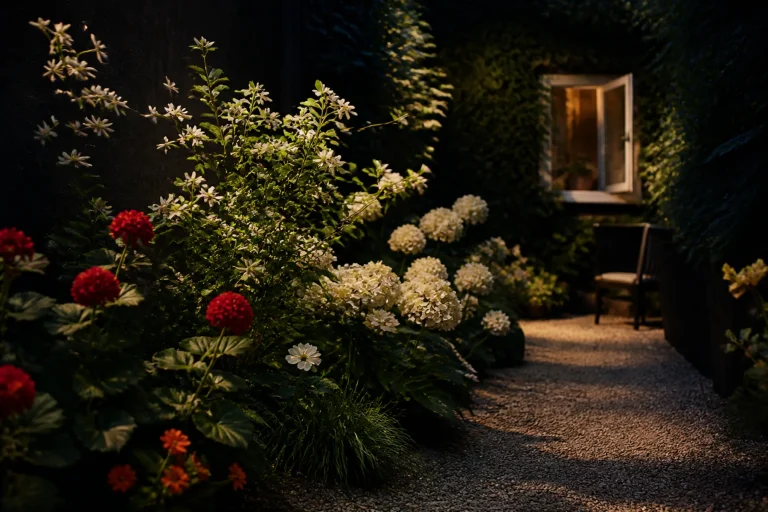
A clear path, one visible threshold, a soft wash on a useful wall, and one plant or branch allowed to become the evening focal point.
Choose what earns the night
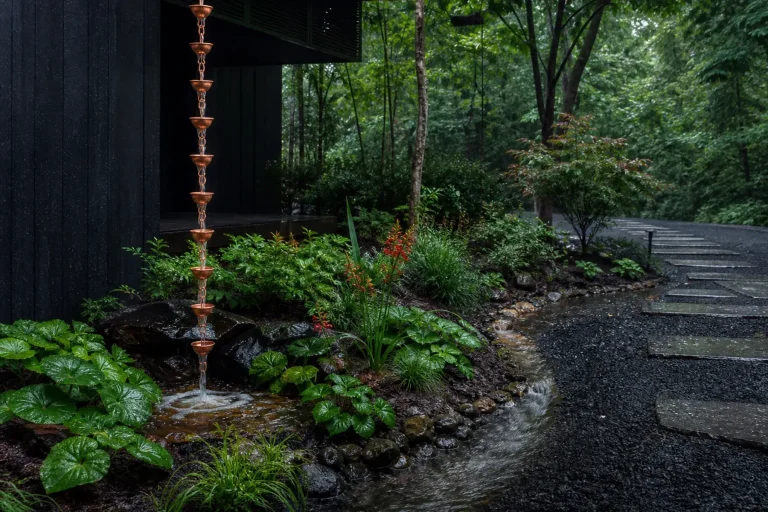
Not every daytime focal point remains interesting after sunset. Flowers often vanish. Pale bark, strong branching, textured walls, grasses, and large leaves may become more expressive.
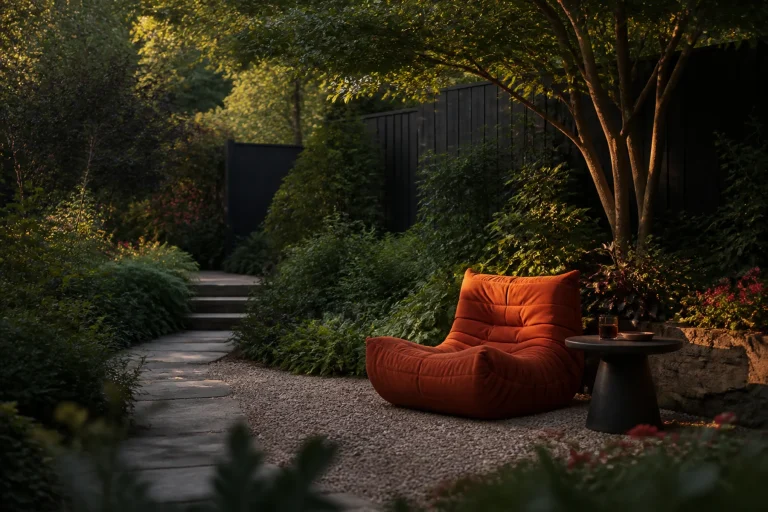
Pick one or two scenes from the places where the garden is actually viewed at night. This might be the dining table, the kitchen window, or the route from the car. Aim for depth rather than coverage. A dim foreground and one lit form farther away can make the garden feel larger than an evenly bright lawn.
Control is part of the composition
Timers, dimmers, and motion controls are not merely energy features. They determine when the garden performs. Entry lighting may be useful until everyone is home. A dining area may need light only while it is occupied. Decorative light does not need to stay on until sunrise.
Use warmer light where possible and keep beams aimed downward or tightly at their intended surface. Shielding can reduce glare and prevent light from spilling into a neighbor’s home or wildlife habitat.
Turn half of it off
If an existing lighting plan feels flat, switch off every other fixture. Then remove the ones that do not help with movement, use, or a deliberate view. Re-aim what remains. Lower the output. Stand inside and look out again.
The garden should not look closed when the sun goes down. It should look edited.