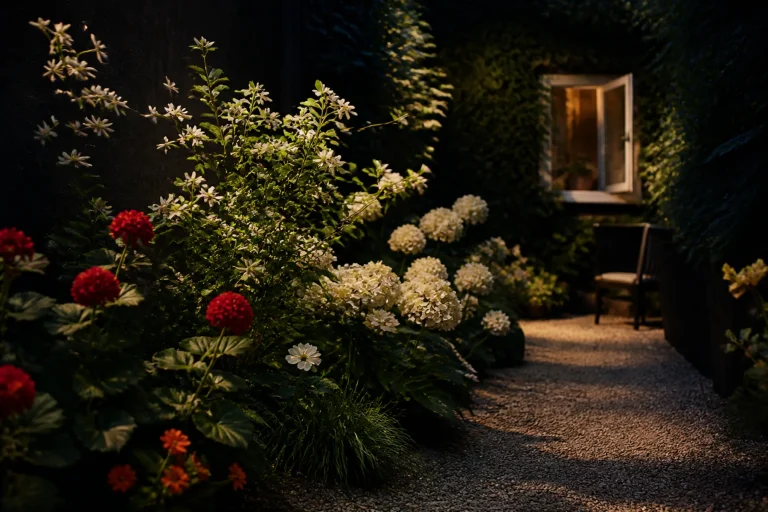
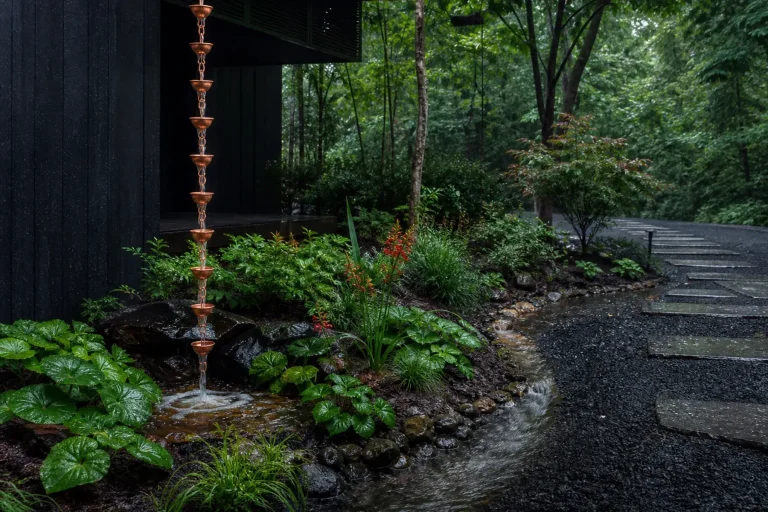
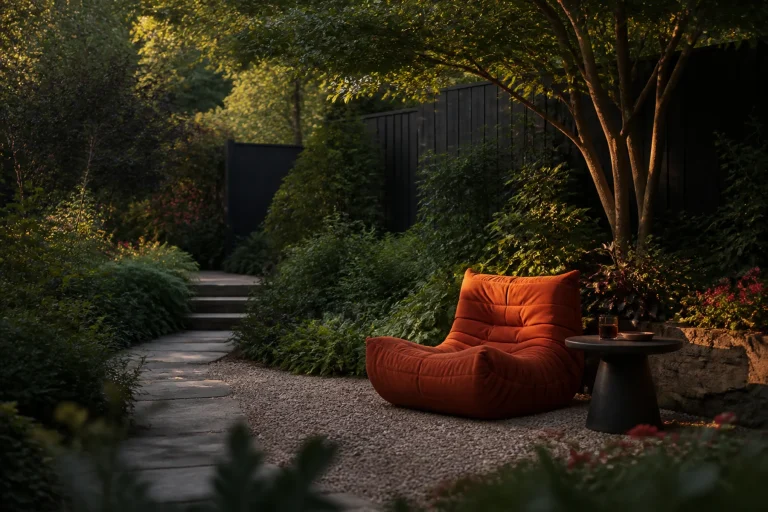
A Garden Needs More Than Bloom
Flowers are a season. Form, foliage, bark, and the shape of the garden carry the rest of the year.
Flowers are wonderful. They are also temporary employees.
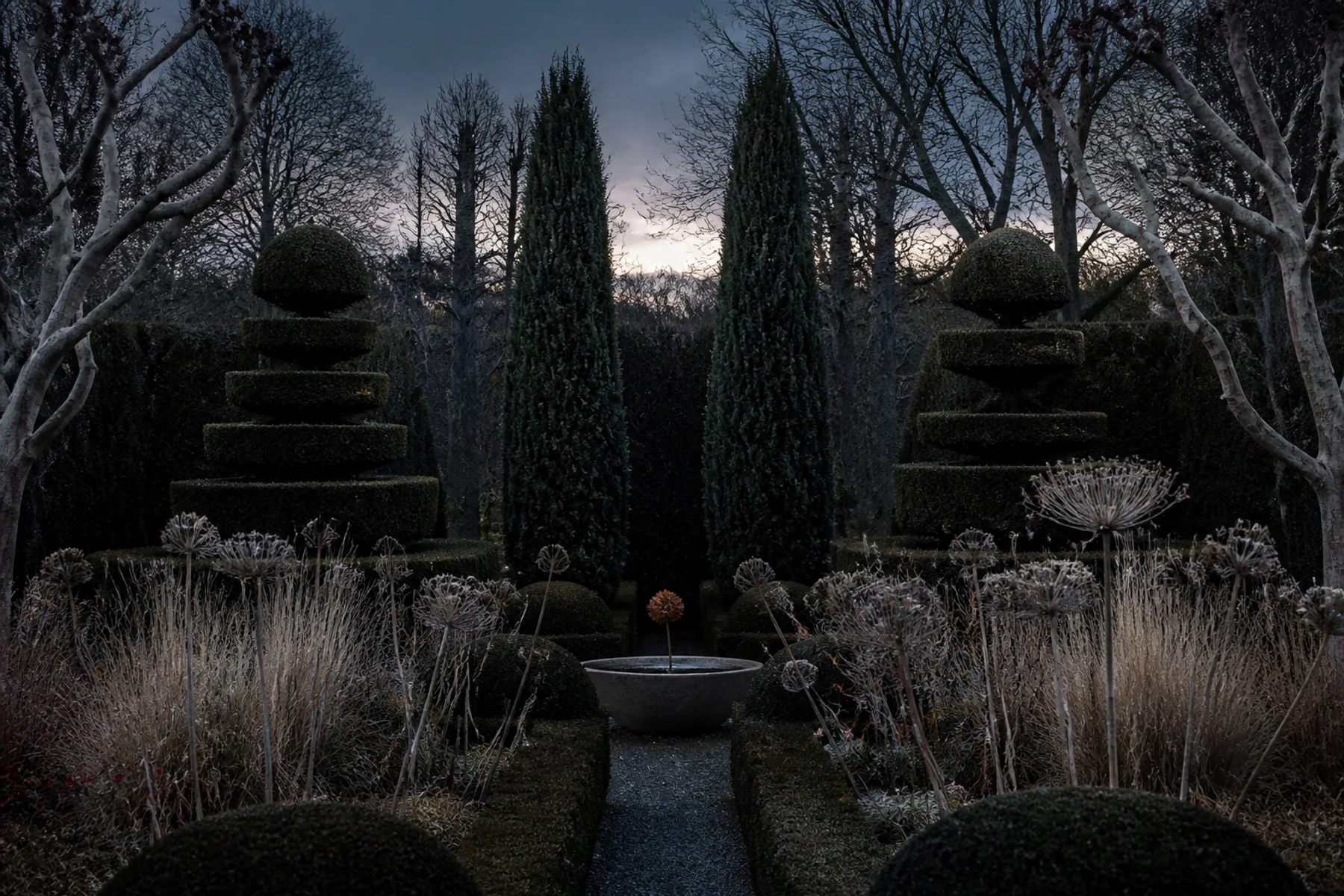
For much of the year, a garden depends on everything around the flowers. The shape of shrubs, the line of a path, the weight of evergreen foliage, the color of bark, and the remains of grasses and seedheads decide whether the space still feels considered.
The quiet season is not an intermission. It is when the structure tells the truth.
Photograph the quiet season
Take pictures when the garden is at its least impressive. This may be winter, the dry season, or the long pause between major bloom periods. The weak parts of the design become easier to see when color is not providing a distraction.
Look for empty centers, exposed fences, awkward gaps, and areas that have lost all vertical shape. Also notice what still works. A strong hedge, handsome trunk, dark container, or clear bed edge may be doing more than you realized.
Use evergreen as structure, not wallpaper
Evergreen plants can provide year-round form and color. They do not all need to be identical or arranged in a defensive row.
Choose forms that serve the composition. Upright plants can mark an entrance. Rounded shrubs can anchor a corner. Low spreading forms can hold the edge of a bed. University of Minnesota Extension recommends considering the form, color, texture, foliage, bark, cones, and berries of evergreens rather than treating them as one category of green.
A few well-placed evergreens can support a larger collection of deciduous and flowering plants. Too many similar evergreens can make the garden feel heavy and static.
Keep useful remains
Not every perennial needs to be cut down the moment flowering ends. Upright seedheads and grasses can hold snow, catch low light, and give the garden a different kind of detail.
Keep what remains stable and attractive. Remove material that collapses into paths, traps excessive wet debris, or shows signs of disease. The goal is not automatic cleanup or automatic neglect. It is selection.
Let bark and branches participate
Deciduous plants do not disappear when their leaves fall. Branching habit, stem color, and bark texture can become the main event. A multi-stemmed shrub can filter a view even without leaves. A tree with a clean silhouette can organize the whole scene.
Place these plants where low seasonal light or a simple background makes their structure visible. Good winter interest is often less about adding objects and more about giving existing forms room to be seen.
Build a garden that can hold a pause
Review the quiet-season photograph and find four things.
- One strong evergreen shape
- One clear line or edge
- One plant with worthwhile bark or branches
- One group of grasses or seedheads worth keeping
You do not need equal interest in every corner or every month. You need enough structure that the garden still feels like itself when the flowers have gone home.